


What is Plug & Charge?
Automatic authentication when charging electric vehicles
Blog 04.11.2026
A charging session fails. Not because the charging station is faulty, but because authentication fails: the RFID charging card is not recognised, or the app does not respond, and the driver stands helplessly in front of the charge point. For end customers, this means frustration and lost time. For the operator, it becomes a support case and, if it happens often, additional effort internally and externally, as well as damage to reputation.
Authentication is far more than the technical starting point of a charging session for CPOs. It is the moment when authorisation, billing and user experience come together, and the moment when errors become most visible. As infrastructure grows, with more e-mobility providers (EMPs), more differentiated user groups and rising demands for interoperability, this process becomes increasingly demanding.
Plug & Charge, which means simply plugging in the electric vehicle and charging, addresses exactly this complexity. But will Plug & Charge become the new standard for public charging, or will it remain one of several access methods? One thing is clear: Plug & Charge standardises and automates authentication. This offers advantages that become strategically relevant for CPOs, particularly when it comes to scaling and process reliability.

In short
Plug & Charge enables you to charge an electric vehicle without a charging card or app.
Drivers simply plug in the charging cable, and the vehicle authenticates itself automatically at the charging station. This confirms that a valid charging contract exists and that the charging session may start. For CPOs, Plug & Charge simplifies authentication and the assignment of charging sessions to the correct billing. It requires compatible vehicles and charge points, as well as suitable software. Plug & Charge complements existing methods such as RFID cards and apps rather than replacing them entirely.
Why is authentication so important for CPOs when charging?
But first, let us take a few steps back. At a heavily frequented charging location, dozens or even hundreds of charging sessions run every day, with different users, various mobility providers and a high expectation of availability. Each individual session must be clearly authenticated, assigned to a contract and billed correctly. What looks like a simple start for the driver is a complex process for the operator, one that must work at many points at the same time.
Many CPOs who operate charging infrastructure at scale use different systems for different tasks in the charging process: billing, accounting, fleet management, access management and reporting. The more systems run in parallel, the more demanding it becomes to keep them consistent and aligned. Authentication is the linchpin here. It determines whether a charging session starts, who it is assigned to and how it can be billed. Errors at this point carry through the entire process chain, which brings us back to the starting scenario.
The more complex the infrastructure, the more important it becomes to have software that is interoperable and either already integrates existing systems or can connect to them with minimal effort. Authentication is not an isolated problem. It is the point at which reliability, process security and user experience are all at stake at once.
Which authentication methods are there?
From RFID to Plug & Charge
Today's market offers several authentication methods. Each has its place, but none meets every requirement equally well.
RFID is the most widely used method for contract-based charging. It is proven, fast and well suited to many operating models. Its key weakness, however, lies in security: an RFID card can be copied without great effort and then misused. In addition, cards can be lost, damaged or forgotten.
App-based charging offers more flexibility and enables digital management without a physical card. However, it requires users to have the app installed, an account and a smartphone that is charged and within reach. Underground car parks and remote areas often have no reception, which can cause authentication to fail quickly.
Ad hoc charging with card or wallet payment provides spontaneous access without a contract, making it accessible to anyone who wants to charge without a fixed commitment. In practice, however, other factors also affect a positive charging experience. The credit card must have sufficient funds and still be valid. With QR code payment, the smartphone must not only be available and charged, but, as with app-based charging, it also needs sufficient mobile reception.
AutoCharge uses the vehicle identifier (EVCCID), which is transmitted automatically when the vehicle is connected, to start the charging session without any manual action. This sounds like Plug & Charge, but it is not. AutoCharge is a proprietary approach without a standardised security architecture. It works mainly in controlled environments, such as small fleets or closed depots, but it does not offer certificate-based identification and is not interoperable across different networks and providers. For CPOs operating across networks, this is a decisive difference.
Plug & Charge takes a different approach. As soon as the cable is plugged in, authentication runs entirely in the background. No card, app or interaction with the display is required.
The difference is not just one of convenience. While other methods require a physical or digital identification medium, authentication with Plug & Charge takes place directly through the connection between the vehicle and the charging infrastructure.
Anyone who charges daily knows how much effort adds up over time: searching for the card or the app, the smartphone with no signal, the terminal that does not respond. Plug & Charge removes this additional step. For users, charging becomes simpler. For CPOs, the advantage comes mainly from standardised and automated authentication.
Alongside the charging experience, security is the decisive factor, including in comparison with AutoCharge. The certificates are standardised, communication is encrypted, and every vehicle has its own digital fingerprint. This makes Plug & Charge independent of closed operating environments and suitable for public use cases as well.
How does Plug & Charge work?
Plug & Charge changes the way vehicles and charging infrastructure communicate. As soon as a vehicle is connected to the charging cable, a communication process according to ISO 15118-2 starts in the background. The vehicle and the charge point exchange digital certificates, which are provided and verified by a certificate infrastructure, usually through a service such as Hubject. The CPO's backend verifies the validity of the certificate, assigns the charging session to the stored charging contract and releases the start. Simply plug in, and the vehicle charges.
What does Plug & Charge mean for operating charging stations?
No card that can be lost or copied.
No app that needs reception or has to be updated.
Fewer manual steps for identification and assignment.
Instead, authentication runs automatically and in a standardised way via the connection between the vehicle and the charging infrastructure.
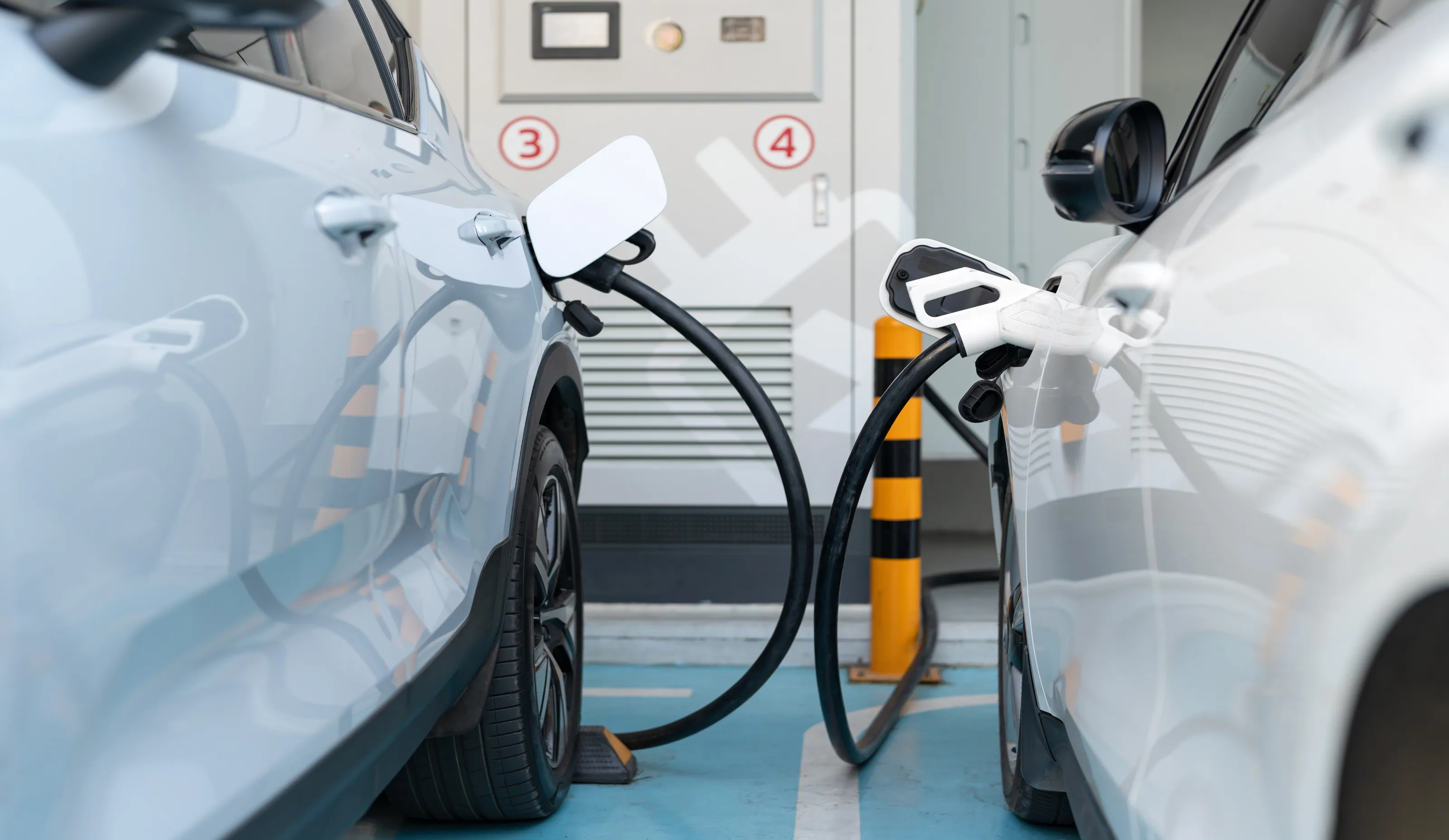
How does Plug & Charge work?
Plug & Charge changes the way vehicles and charging infrastructure communicate. As soon as a vehicle is connected to the charging cable, a communication process according to ISO 15118-2 starts in the background. The vehicle and the charge point exchange digital certificates, which are provided and verified by a certificate infrastructure, usually through a service such as Hubject. The CPO's backend verifies the validity of the certificate, assigns the charging session to the stored charging contract and releases the start. Simply plug in, and the vehicle charges.
What does Plug & Charge mean for operating charging stations?
No card that can be lost or copied.
No app that needs reception or has to be updated.
Fewer manual steps for identification and assignment.
Instead, authentication runs automatically and in a standardised way via the connection between the vehicle and the charging infrastructure.
For CPOs, Plug & Charge is therefore relevant not only in the DC and HPC environment. chargecloud is also integrating automatic vehicle authentication according to ISO 15118-2 for AC charge points into chargecloud OS. This is particularly relevant because, in practice, Plug & Charge has so far been mainly used on DC fast chargers, while AC charge points make up by far the larger share of public and semi-public charging infrastructure.
For public and semi-public charging, Plug & Charge mainly simplifies assignment. When the vehicle is plugged in, its certificate is automatically matched to the charging contract stored with the EMP, and authorisation runs through the existing backend and roaming processes. CPOs can still be listed with several EMPs and serve different roaming relationships. Plug & Charge does not replace the EMP; it replaces the manual identification medium.
Ad hoc access and card payment remain relevant for spontaneous users. For contract-based operation, however, Plug & Charge creates a standardised access method that can be integrated into existing processes.
What are the prerequisites for Plug & Charge?
Plug & Charge depends on a well-functioning interplay: the vehicle must support ISO 15118-2, the charge point must be equipped accordingly, the backend must be able to map the certificate logic, and the mobility provider must be connected to the certificate infrastructure. This is not a trivial requirement, but it is a solvable one.
The regulatory landscape is also moving in this direction. Since 8 January 2026, newly installed or substantially renovated publicly accessible charge points in the EU must support ISO 15118-2. From 1 January 2027, this requirement will also apply to private Mode-3 charge points, which will then use the extended standard ISO 15118-20.
For CPOs, Plug & Charge is therefore no longer a vision of the future. It is a requirement you should be prepared for.
chargecloud OS: one solution for all authentication methods
Plug & Charge will not replace RFID and apps, at least not in the short term. Vehicle fleets are too diverse, user groups too heterogeneous, and requirements too varied depending on location and use case.
For CPOs, this creates a clear requirement for operating software: it must be able to support different authentication methods in parallel and be open to integrating new methods without fundamentally changing the existing infrastructure.
chargecloud OS is built for exactly this. RFID, app, direct payment, AutoCharge and ad hoc access can already be managed, controlled and analysed in one central system today. Operators retain control over which access methods apply at which sites, which user groups have which rights, and how charging sessions are billed.
With Plug & Charge for CPOs, chargecloud already provides this next step as a standalone feature within chargecloud OS. The solution integrates ISO 15118-2 communication for OCPP 1.6, certificate handling and the connection to Hubject as the certificate infrastructure. CPO customers can have Plug & Charge-enabled charge points activated as part of the rollout, provided the technical equipment allows it.
For CPOs, the goal is for different users to charge reliably and for new authentication methods to be integrated once vehicles and charging infrastructure are ready for them.
With chargecloud, existing authentication methods can be managed centrally, and Plug & Charge can be deployed wherever the technical requirements are met.